Taking time to unpack the thinking involved in noticing and correcting an error is a powerful way to better understand the layers of cognition an error sets in motion.
Here’s an example:
On first glance, I read the title of this James Patterson book as “1st TODIE” (think toadie). Since “1st TODIE” had no meaning to me, I was baffled. That moment of confusion sent me straight into probelm solving mode.
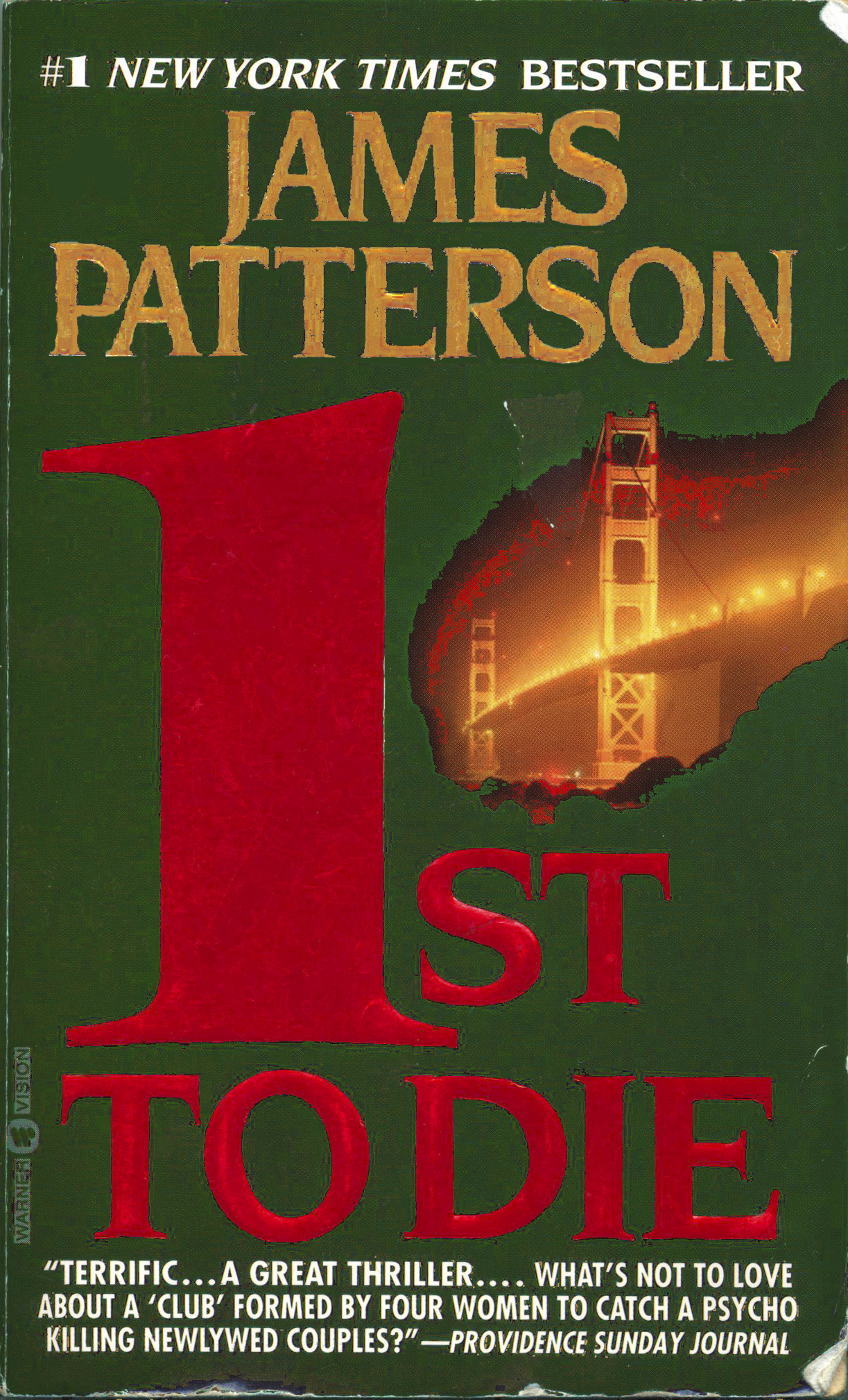
Below is charted deconstruction of that experience. As you can see, resolving the error turned out to be a full body experience, complete with a physical response, an inner dialogue, imagined sounds, and mental images at each step of process. (Note: While this process looks lengthy, the entire process of correction took less than 2 seconds.)
| Error solving processes | Physical response to error |
Inner thoughts of error solving process | Mental image of error solving process |
Imagined sound of error solving process |
| 1.Dissonance noted: What? Todie???? | Jolting to a stop | What’s a Todie? This doesn’t make sense! |  |
Screeching tires |
|
2.Problem solving begins |
Webbing connections between I know, what I expected and potential solutions. | What’s a Todie? Could it be pronounced Toddie? Should I reread? What else could it be? |  |
Car trying to go forward, then reversing, then turning |
| 3.Arriving at a possible solution |
Pausing and reflecting on possibilities: Is there a space between two words? |
Hmmm…. it seems like a solution, but will it make sense as a book title? |
(note the dotted, less than confident check)
|
Car accelerating cautiously |
| 4. Checking for accuracy and a match to the context | Relieved, confident, relaxed | Yes! That makes sense. |  |
Car driving smoothly at speed |

This exercise highlights the importance of learning how to problem solve strategically:
- noticing the disequilibrium caused when things stop making sense
- searching for information that restores understanding and equilibrium
- confirming that the solution truly fits the full context (mystery novel), not just the item (correct pronunciation)
Learners of all ages benefit from seeing this type of problem solving made visible. During a professional learning conversation, a colleague connected a poorly kicked soccer ball his error to the physical response, sound, inner thoughts, he experienced. This connection allowed him to understand what it felt like to make an error and how the error, in his words, “wasn’t just a mistake, it was a call to action”. Even at this late stage of his academic career, he was astounded by this new, and very useful, perspective on errors.
Now, take it to your classroom. The next time you make an error – stumble over a word, miscalculate an algorithm, or miss a step completing a fail a pirouette – pause and share your error experience with your students.
Now, ask the students to do the same thing.
Learning to embrace an error as a “call to action” allows students to feel the potential of an error to develop a whole new perspective on problem solving.
Beyond the Apple Professional Learning Discussion Guide: Errors as a Call to Action: Making Problem-Solving Visible
Purpose of the Session
To help educators:
- Reframe errors as productive moments of cognition rather than failures
- Examine the layered thinking (cognitive, physical, emotional, sensory) involved in noticing and correcting errors
- Explore how making error-solving visible can deepen student learning and resilience
Opening Reflection (5–10 minutes)
Prompt (Silent Write):
Think of a recent moment when something didn’t make sense—in daily life, reading, math, movement, technology, etc.
- What signaled to you that there was a problem?
- What did you do next?
Optional Share:
Invite 1–2 volunteers to briefly share. Do not analyze yet—just listen.
Anchoring Text Discussion: The “1st TODIE” Example (10–15 minutes)
Facilitator Move:
Revisit the example of misreading 1st TO DIE as 1st TODIE and the charted deconstruction of the experience.
Discussion Questions
- Noticing the Error
- What was the first indicator that something was wrong?
- How is “disequilibrium” described in this example?
- Layers of Cognition
- What types of responses were involved in resolving the error?
- Physical
- Emotional
- Cognitive
- Sensory (sound, image)
- Which of these layers do we typically name in classrooms? Which are usually invisible?
- What types of responses were involved in resolving the error?
- Speed vs. Complexity
- The correction took less than two seconds. Why is it important to slow it down and unpack it anyway?
- What does this suggest about how much thinking happens beneath the surface for learners?
Reframing Errors (10 minutes)
Key Idea from the Text:
“The error wasn’t just a mistake, it was a call to action.”
Discussion Questions
- How is this framing different from how errors are often treated in classrooms?
- What messages do students receive—explicitly or implicitly—about errors?
- How might this reframing change:
- Student risk-taking?
- Perseverance?
- Identity as a learner?
Connection Prompt:
Where do you already see students responding to errors as calls to action (even if they don’t name it that way)?
Classroom Transfer: Making Error-Solving Visible (15–20 minutes)
Facilitator Prompt:
The post encourages teachers to pause during their own errors and narrate the experience for students.
Small-Group Discussion
- What types of teacher errors are most powerful to share?
- Academic (misreading, miscalculating)
- Procedural (missing a step)
- Physical (sports, arts, movement)
- Technological
- What might students learn if they regularly heard:
- Inner dialogue
- Physical reactions
- Strategies for restoring understanding
- How context is checked for accuracy
- What might feel uncomfortable about doing this? Why?
Student Application: Inviting Learners Into the Process (10 minutes)
Prompt:
Imagine asking students to chart or describe their own error-solving experiences.
Discussion Questions
- What scaffolds would students need to do this meaningfully?
- How might this look different across:
- Grade levels
- Content areas
- Learner needs
Possible Student Reflection Frames (Discuss, Don’t Distribute Yet):
- “When something didn’t make sense, I noticed…”
- “My body reacted by…”
- “The questions I asked myself were…”
- “I knew my solution worked because…”
Synthesis and Closing Reflection (5 minutes)
Whole-Group Prompt:
- How does this perspective change the way you think about:
- Mistakes?
- Feedback?
- Assessment?
- Student confidence?
Exit Reflection (Written or Spoken):
- One idea from today I want to try
- One belief about errors that shifted
- One question I’m still holding
Key Takeaway: Errors are not interruptions to learning—they are invitations into it.
When educators make the full error-solving process visible, learners gain access to strategies, confidence, and a deeper understanding of how thinking works. The following samples reinforce this strategy for A) primary school students and B) secondary students:
A) Primary School: When I Make a Mistake
Mistakes help my brain grow!
- I Knew Something Was Wrong When…
☐ It didn’t make sense
☐ It didn’t sound right
☐ It looked funny
☐ I felt confused
🖍 Draw or point:
What made you stop?
- My Body Did This
☐ I stopped
☐ I felt wiggly
☐ I felt tight
☐ I took a breath
🖍 Show it with your body or draw it.
- I Said in My Head…
☐ “Huh?”
☐ “Let me try again.”
☐ “That’s not right.”
🗣 Teacher can model saying this out loud.
- What I Tried Next
☐ I looked again
☐ I tried a new way
☐ I fixed it
☐ I asked for help
🖍 Draw what you did.
- Then It Made Sense!
☐ Yes!
☐ Almost
☐ Not yet
💬 Tell or draw how you know.
⭐ My Big Learning
Finish together:
My mistake helped me _______________________.
How to Use This With Young Learners
Best practices:
- Do this together, not independently at first
- Accept talk, drawing, pointing, or acting
- Keep it short (2–3 minutes max)
- Revisit often so it becomes normal
Teacher Think-Aloud Example:
“Oops! That didn’t sound right. My body stopped. I thought, ‘Let me try again.’ I looked again… Oh! Now it makes sense.”
Classroom Language to Reinforce
- “Your brain noticed something.”
- “That mistake helped you think.”
- “What did you try next?”
- “Mistakes tell us what to do.”
B) Middle School and Secondary Level: When I Got Stuck: My Error Reflection
Optional Visual Support (Anchor Chart Headings)
- 🚦 I stopped
- 🧠 I thought
- 🔍 I tried
- ⭐ I learned
Remember: An error is not a failure — it’s a call to action.
- The Moment I Knew Something Was Wrong
What made me stop or feel confused?
☐ It didn’t make sense
☐ It didn’t sound right
☐ The answer didn’t fit
☐ Something felt “off”
✏️ Write or draw:
- My Body’s Reaction
What did my body do when I noticed the error?
☐ Froze
☐ Paused
☐ Felt tense
☐ Took a breath
☐ Other: ______________________
✏️ Describe it:
- My Inner Thoughts
What was I saying to myself?
☐ “Wait… what?”
☐ “That can’t be right.”
☐ “Let me try again.”
☐ “What else could this be?”
✏️ My thoughts:
- What I Tried to Fix It
What actions did I take?
☐ Reread
☐ Rechecked my work
☐ Tried a different strategy
☐ Looked for clues
☐ Asked a question
✏️ What I tried:
- Did I Picture or Hear Anything in My Mind?
Some people think in pictures or sounds.
☐ I saw an image
☐ I heard a sound
☐ I didn’t notice this time
✏️ Describe (optional):
- Finding a Solution
What helped things start to make sense again?
- Checking My Answer
How did I know my solution really worked?
☐ It fit the whole problem
☐ It matched the context
☐ I could explain it
☐ I felt confident
✏️ Explain:
⭐ What This Error Taught Me
Finish the sentence:
This error helped me learn that ____________________________.
Teacher Tip (not shown to students)
- Model this tool using your own real error
- Accept drawings, bullet points, or oral responses
- Use it after productive struggle, not during frustration
- Emphasize: speed doesn’t mean shallow thinking


 Beyond the Apple: Reimagining teaching through professional conversations