Set the tone for learning by posting a note on the classroom door:
When students enter this classroom, a wondering prompt such as an image, soundscape, or object invites them to look closely and use their senses and background knowledge to problem solve.
Here’s an example of how to set up a wondering prompt:
- Wrap an unusual object and place it on a table with a note:

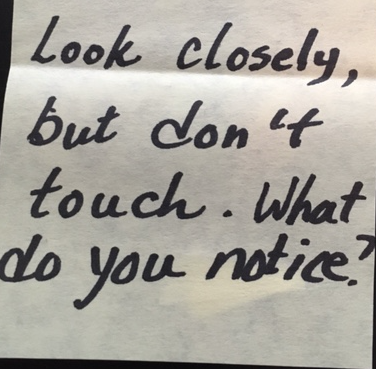
As the students look closely and gather information about the object, open the door to problem solving a bit wider.

Listen as the students share ideas about the shape, the hardness, the thickness, or the scent.
Note: This is a great opportunity for formative assessment of each student’s oral language, background knowledge, problem solving, so listen closely and take notes.
Next, invite the students to unwrap the object and encourage them to extend their ideas with prompting questions such as:
- What do you think this is?
- A long time ago, this object had sharp edges. How do you think the edges become dull?
- This was found on a beach, how do think it got there?
- This object comes in other colours. What other colours do you think you could find?
- What could you use this object for?
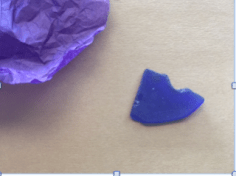
NOTE: If you’re not sure what this is, click here.
Now, the wondering prompt becomes an anchor for a lesson. The subject of that lesson is up to you – it might be science, language arts, or history – the choice depends on how you feel this object connects to the next steps of the students’ learning.
From an opportunity to wonder, many lessons are born. And it all starts by taking a close look.
—————————————
Beyond the Apple Discussion Guide:
Using Wondering Prompts to Foster Curiosity
Purpose:
This session is designed to help educators reflect on ways to spark curiosity, support problem-solving, and assess students’ oral language and background knowledge through wondering prompts.
Session Overview
- Set the Context – Introduce the idea of wondering prompts as a strategy to invite your colleagues to experience the curiosity and close observation described in the post above.
- Examine an Example – Review a sample wondering prompt setup with an object, image, or soundscape.
- Discuss Practice & Reflection – Colleagues share ideas, reflect on potential challenges, and plan classroom applications.
- Connect to Learning Goals – Explore how curiosity can anchor lessons in different subject areas.
Step 1: Opening Discussion
Prompt:
“Think about a time when a student noticed something unexpected or asked a question that led to deep learning. What conditions helped that happen?”
Discussion Questions:
- What does it mean to “set the tone for learning” in your classroom?
- How do wondering prompts create a space for curiosity and problem-solving?
- Why is it important to observe student thinking before revealing answers?
Step 2: Explore a Wondering Prompt
Example Setup:
- Wrap an unusual object and place it on a table with a note.
- Invite colleagues to notice: shape, texture, color, scent.
- Listen to their observations and ideas before revealing the object.
Reflection Questions:
- What kinds of thinking are revealed in this moment?
- How could you use these observations to guide next steps in instruction?
- What formative assessment opportunities do you see in this process?
Step 3: Extend the Wonder
Example Prompts for Colleagues:
- What do you think this is?
- How might this object have changed over time?
- How did it get here?
- What could it be used for?
Discussion Questions:
- How do open-ended questions encourage problem-solving and critical thinking?
- How might you scaffold this for students with varying levels of background knowledge or language skills?
- How can these prompts connect to inquiry-based learning in your content area?
Step 4: Connect to Instruction
Reflection Questions:
- How could a wondering prompt anchor a lesson in science, language arts, or social studies?
- How do you balance guiding students and letting them explore independently?
- What are some examples of objects, images, or soundscapes you could use in your classroom?
Step 5: Takeaways & Next Steps
Action Planning:
- Identify one wondering prompt you could try this week.
- Plan how you will capture student observations and use them to guide the next steps in learning.
- Discuss strategies for sharing results with colleagues to refine practice.
Key Ideas for Professional Reflection:
- Wondering prompts foster curiosity, observation, and problem-solving.
- Listening closely provides insight into students’ knowledge and thinking.
- A small moment of wonder can anchor multiple subject lessons.
- Collaboration with peers enhances idea generation and application.


 Beyond the Apple: Reimagining teaching through professional conversations